
Navigating diabetes in pregnancy can be challenging.
Diabetes, whether pre-existing or gestational, can have a profound impact on the health and wellbeing of you and your baby. Effective blood glucose control can help to reduce that impact. At ROC, our goal is to improve the outcomes of mother and child through diabetes education and management during pregnancy.
Working with Our Diabetic Educator
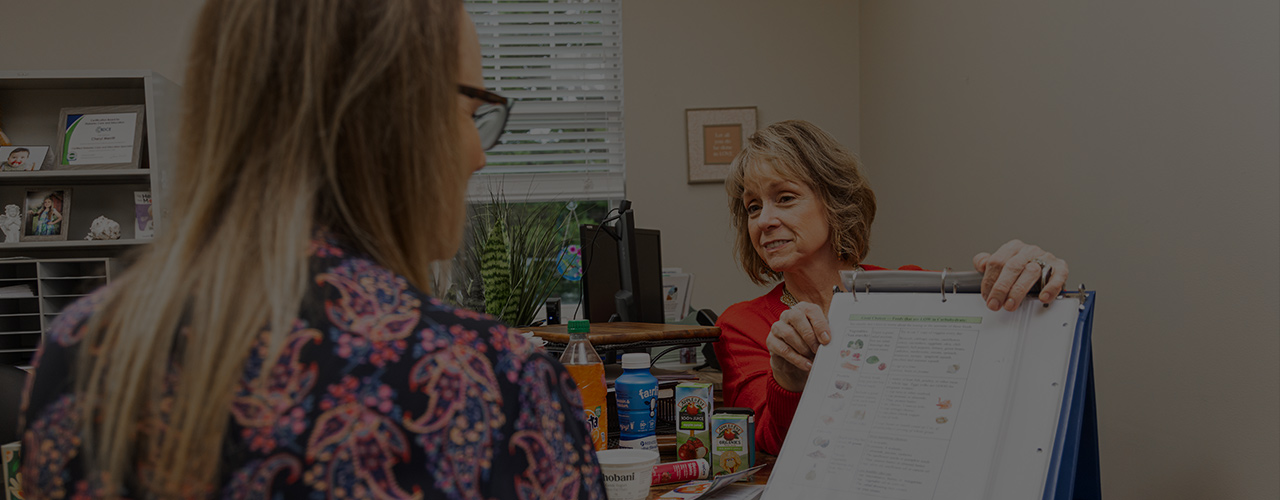
Our diabetes care and education specialists (CDCES) are certified by the National Certification Board for Diabetes Educators and help patients confront the challenges of diabetes during pregnancy while providing support and education. Each woman referred to Regional Obstetrical Consultants for diabetes is seen by a CDCES, unless under the management of another provider. Referrals may be for gestational diabetes, pre-existing diabetes (Type 1 or Type 2), PCOS, metabolic syndrome, pre-diabetes or insulin resistance. Other diagnoses may be evaluated on a case-by-case basis.
Patients with diabetes can expect to meet with a CDCES to evaluate the knowledge and skills required for optimum blood glucose management in pregnancy. Even patients who have had diabetes education in the past may require additional education and skills to manage their glucose well during their current pregnancy. Diabetes education includes causes of diabetes/diabetes in pregnancy, target blood glucose levels in pregnancy, blood glucose monitoring, meal planning and problem solving as it relates to elevated or low blood glucose. Postpartum diabetes care is also addressed to ensure patients are prepared for the road ahead.
Blood Glucose Monitoring and Communication
Blood glucose monitoring, whether by fingerstick or continuous glucose monitoring (CGM), is essential to evaluate the status of blood glucose control in pregnancy. Patients are expected to report blood glucose levels 1-2 times per week to their assigned CDCES based on their diagnosis and mode of treatment. Blood glucose levels can be communicated by:
- Calling in a blood glucose log or attaching blood glucose logs to an email
- Using an app and communicating any updates in the app by email or call
- using a CGM and communicating by email or call to report data has uploaded to the clinic site
Patient communication is crucial to making timely decisions regarding adjustment of diet and medication.
It Takes a Team
Working together, we can increase the likelihood of a healthy pregnancy and healthy baby!